
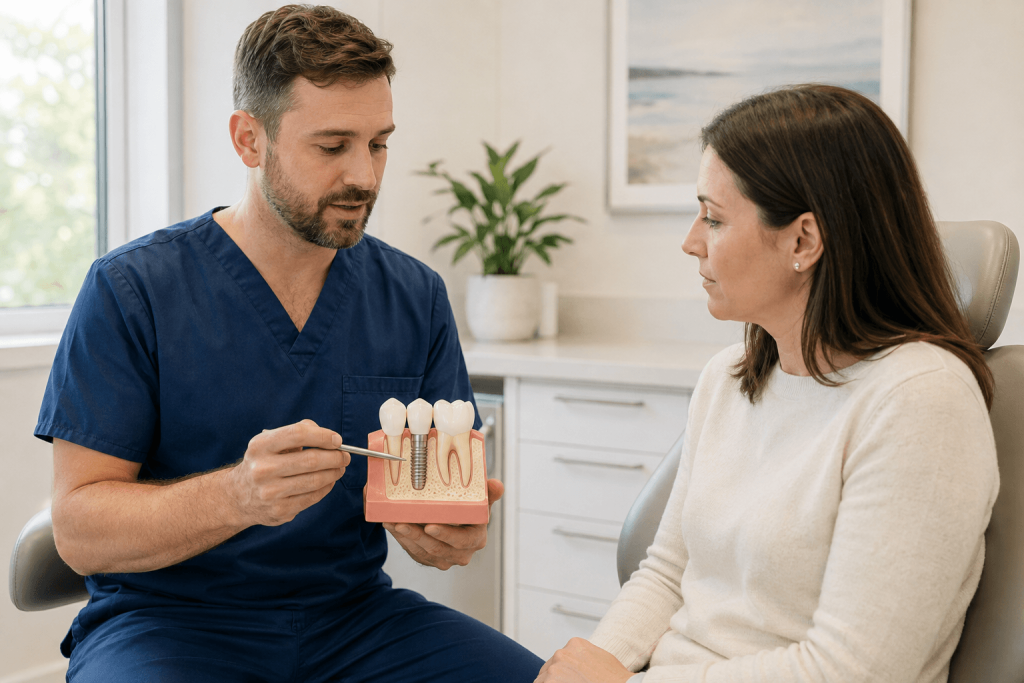
 A dental implant may be considered when replacing one missing tooth, but it isn’t automatically the right option for every patient. A dentist first needs to assess the surrounding teeth, gums, available bone, bite, oral hygiene, medical history, and treatment goals.
An implant is designed to replace the missing tooth root and support a replacement tooth above the gums. However, bridges and partial dentures may also be discussed depending on the condition of the mouth and the patient’s preferences.
Patients exploring dental implants in South Edmonton should begin with an assessment. This provides an opportunity to understand why an implant may or may not be recommended and which other options deserve consideration.
Why Replacing One Missing Tooth May Matter
One missing tooth can affect people differently. Its location, the condition of the remaining teeth, and the way the upper and lower teeth meet all influence whether it creates noticeable problems.
A missing back tooth may make chewing certain foods less comfortable, especially if a person begins relying heavily on the opposite side. A missing front tooth may have a greater effect on speaking or confidence. Some people adjust quickly, while others notice changes in their daily routine.
The open space may also make oral hygiene feel different. Food can become trapped around the area, and the neighbouring teeth may be harder to clean depending on their position. Over time, teeth next to the space may shift, although the amount and rate of movement vary.
Changes in tooth position can affect spacing and the way the bite feels. This doesn’t mean every missing tooth will cause an immediate or serious problem. It does mean that the space should be assessed rather than ignored based only on the absence of pain.
The reason the tooth was lost also matters. Decay, gum disease, injury, or a tooth that never developed may each lead to different considerations. Before discussing replacement, the dentist may need to determine whether the surrounding area is healthy and stable.
Replacing a tooth can have practical and personal benefits, but treatment shouldn’t be based on pressure or assumptions. A consultation allows the patient to understand the possible effects of leaving the space, the options for replacing it, and the care each option may require.
When a Dental Implant May Be Discussed
A single-tooth implant may be discussed when a patient wants a fixed replacement for one missing tooth. The implant is placed in the area of the missing root and later supports a replacement tooth. Unlike some other options, it does not rely on a removable appliance.
That description does not establish candidacy. Several clinical and personal factors affect whether implant treatment may be considered.
Bone Support
An implant needs sufficient bone support in an appropriate location. Bone volume can change after tooth loss, and the amount available cannot be judged by looking at the gums alone. A dentist may recommend imaging or further assessment to better understand the area.
If bone support is limited, the dentist can explain how that finding affects the available options. It does not automatically mean that no treatment is possible, but it may change the recommendation or the steps involved.
Gum Health
The gums and supporting tissues around the planned implant area need careful assessment. Active gum disease or inflammation may need to be addressed before implant treatment is considered.
Patients who need help managing their gum health may be advised to discuss periodontal care as part of preparing the mouth for future treatment. The appropriate care depends on the findings from an examination.
Oral Hygiene
A dental implant and its replacement tooth still require regular cleaning and professional care. Although an implant cannot develop a cavity, the surrounding tissues can become unhealthy.
A dentist may discuss brushing, cleaning between the teeth, and attendance at recommended dental visits. Patients should feel comfortable asking what daily maintenance would involve before deciding whether an implant fits their routine.
General Health and Healing
Medical history, medications, and factors that may affect healing are also relevant. Provide an accurate health history and tell the dentist about any changes, even if they don’t appear connected to your teeth.
The dentist may need to consider this information when discussing treatment or coordinate with another healthcare provider where appropriate. Patients shouldn’t stop or change prescribed medication for dental treatment unless directed by the prescribing professional.
Condition of the Nearby Teeth
The teeth beside the gap can influence which replacement options are worth discussing. Their health, position, restorations, and role in the bite may affect whether an implant, bridge, partial denture, or another approach should be considered.
One possible advantage of an implant-supported replacement is that it is planned independently of the neighbouring teeth. However, this doesn’t make it the best choice in every situation. If the nearby teeth already require treatment, another option may deserve consideration.
Patient Goals
Some patients prioritize a fixed replacement, while others prefer an option involving fewer stages or different maintenance. Appearance, comfort, oral hygiene, finances, and personal expectations may all affect the decision.
A balanced consultation should explain the benefits, limitations, responsibilities, and alternatives without presenting an implant as the only acceptable choice. The final recommendation should reflect both the clinical findings and the patient’s informed preferences.
What a Dentist May Assess First
Before recommending treatment, a dentist in South Edmonton may examine the missing-tooth space, adjacent teeth, gums, bone support, and bite. The assessment may also include a review of oral hygiene, medical history, medications, and the reason the tooth was lost.
Imaging may be needed to evaluate structures that cannot be assessed through a visual examination alone. The type of imaging or further evaluation required will depend on the individual situation.
This assessment helps answer several important questions: Is the area healthy? Is there suitable support for an implant? Do nearby teeth need care? How would the replacement fit into the bite? Are there health or healing considerations that could affect the plan?
Only after reviewing these factors can the dentist explain whether a single-tooth implant may be considered and which alternatives should also be discussed.
How a Single-Tooth Implant Differs from Other Replacement Options
A single-tooth implant replaces the missing root and supports a replacement tooth without using the neighbouring teeth for support. Treatment generally involves multiple stages, although the specific steps and timing depend on the patient’s needs. Patients can read about the dental implant process in Edmonton before discussing their own situation.
A dental bridge fills the space by using nearby teeth for support. A partial denture is removable and may replace one or more missing teeth. Each option has different requirements for care, maintenance, support, and treatment planning.
An implant isn’t automatically better than a bridge or partial denture. The condition of the gums, bone, adjacent teeth, bite, general health, and patient preferences all influence the recommendation.
Questions to Ask About Replacing One Missing Tooth
Before choosing an option, consider asking:
- Am I a candidate for a single-tooth implant?
- What other replacement options should I consider?
- How do my gums and available bone affect my options?
- What steps may be involved?
- What limitations should I understand before deciding?
- How should I clean and care for the area?
- What could happen if I leave the space untreated?
The answers should be based on an examination rather than general information alone.
Frequently Asked Questions About Replacing One Missing Tooth
Is a dental implant always needed for one missing tooth?
No. An implant is one possible replacement option. A bridge, partial denture, or another approach may also be discussed. In some situations, monitoring the space may be considered. The appropriate recommendation depends on the mouth, bite, nearby teeth, and patient’s goals.
How soon should someone ask a dentist about a missing tooth?
It’s reasonable to ask a dentist soon after losing a tooth or learning that one needs to be removed. An early conversation does not commit you to treatment. It gives the dentist an opportunity to assess the area, discuss possible changes, and explain whether the timing could affect your options.
What can affect dental implant candidacy?
Candidacy may be affected by bone support, gum health, oral hygiene, medical history, medications, healing considerations, bite, and the condition of nearby teeth. Imaging or further assessment may be needed before a recommendation is made.
Can a dentist in South Edmonton explain tooth replacement options?
Yes. A general dentist can examine the area and explain which replacement options may be considered. If another type of assessment or care is appropriate, the dentist can discuss the next step. No treatment should be recommended without reviewing the patient’s individual needs.
Talk to Petrolia Dental About Tooth Replacement Options
Replacing one missing tooth is a personal and clinical decision. Understanding the condition of the gums, bone, bite, and surrounding teeth can help patients compare an implant with other possible approaches.
Petrolia Dental serves patients in Edmonton, including South Edmonton and Terwillegar Heights. If you’re missing one tooth, contact Petrolia Dental to request an assessment and discuss which replacement options may be appropriate for you.