
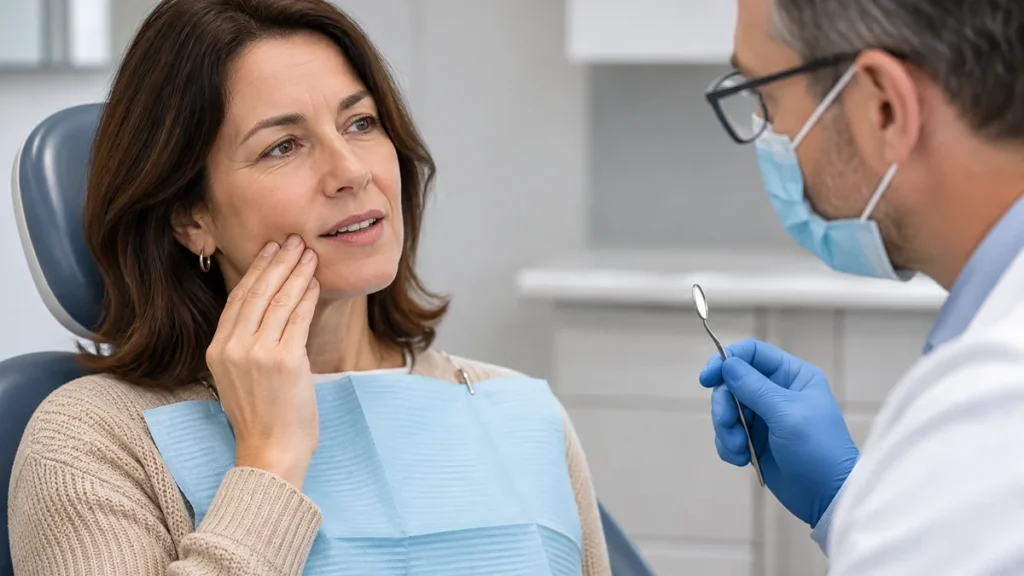
An old filling or dental crown does not need to be replaced simply because it has been in your mouth for years. What matters is whether the restoration is still protecting the tooth, fits properly, and functions without causing problems. A dentist may recommend monitoring it, repairing part of it, or replacing it after an examination.
You may have noticed a rough edge with your tongue, sensitivity when drinking something cold, or a crown that feels different when you bite. Those changes are worth mentioning. But a restoration can also develop problems that are not obvious at home, which is one reason regular examinations still matter.
Does an Old Filling or Crown Always Need Replacing?
No. Dental restorations are made to withstand everyday chewing, but they are not expected to last forever. A filling replaces a portion of tooth structure, usually after decay or damage. A crown covers much of the visible part of a tooth to restore its shape and function. Both can remain useful for years when the surrounding tooth and restoration are in good condition.
Age provides context, not a diagnosis. A filling that has been in place for a long time may still fit well. A newer crown can sometimes need attention if it becomes loose, is damaged, or the tooth beneath it develops a problem.
That is why a family dentist should examine the restoration rather than recommend a replacement based on its age or colour alone. Petrolia Dental’s family and general dentistry services include fillings and crowns for patients in South Edmonton.
Signs That a Filling or Crown Should Be Checked
A change in how a restored tooth looks or feels does not automatically mean a complete replacement is needed. It does mean the tooth deserves a closer look.
Three kinds of changes are especially useful to describe when you contact the office.
A Loose, Chipped, or Rough Restoration
A crown that shifts, a filling that feels loose, or a new rough edge can signal that part of the restoration or the tooth needs assessment. You might notice a sharp spot when your tongue passes over it, or something catching when you floss.
Sometimes only a small area is affected. In other cases, the dentist may need to assess the condition of the remaining tooth before deciding whether a repair is possible. A loose crown should not be treated as a normal sign of age.
New Sensitivity or Discomfort
Sensitivity to cold, heat, sweets, or pressure is worth mentioning, especially if it is new or changing. Discomfort can have several causes. It might involve the restoration, nearby tooth structure, gum recession, a crack, or something unrelated to the old filling or crown.
Try to describe exactly when it happens. Is the sensation brief, or does it linger? Is it triggered by biting, temperature, or something else? Those details are more useful to your dentist than guessing that the filling has failed.
Persistent pain, swelling, or a broken tooth warrants prompt dental advice. Do not wait for a regular cleaning if you are concerned about worsening symptoms.
Changes Around the Edges
The point where a filling or crown meets natural tooth structure is an area your dentist may check carefully. New staining or a visible line at the edge is not by itself proof of decay, but changes there can prompt closer assessment.
The Public Health Agency of Canada notes that cavities can develop around the edges of fillings. The dentist may examine the margin, check for decay or damage, and determine whether the restoration is still sealing and supporting the tooth as intended.
How a Dentist Checks Existing Dental Work
A dental examination looks beyond the visible filling or crown. The dentist may ask about symptoms and past dental work, inspect the restoration and surrounding tooth, check your bite, and consider whether imaging is appropriate. The exact assessment depends on what you report and what the examination shows.
The dentist is looking for questions such as these:
- Is the restoration stable and intact?
- Is there evidence of decay or damage around or beneath it?
- Is the remaining natural tooth sound?
- Does the tooth feel comfortable when you bite?
- Would a repair be reliable, or is a different approach needed?
Some issues are easy to see. Others need a closer clinical examination. An online photo or a description of discomfort cannot establish whether a restoration is sound.
If your filling or crown has been there since before you started visiting this clinic, tell the dental team what you know about its history. You do not need an exact date, but information about previous repairs, sensitivity, or recent changes can help.
Repair, Replace, or Monitor: What Are the Options?
The outcome of an assessment is not automatically a new crown or filling.
Depending on the condition of the tooth and restoration, the dentist may discuss three broad approaches.
- Monitor: If the restoration is stable and there are no concerning findings, the dentist may recommend continued observation during routine dental care.
- Repair: In some situations, a limited defect may be managed without replacing the entire restoration. The available options depend on the material, location, and amount of healthy tooth remaining.
- Replace or provide other treatment: A restoration with significant damage, poor fit, or decay beneath it may require replacement. If the tooth itself has a more complex problem, the dentist may discuss other treatment options.
HealthLink BC explains that dental crowns can become loose or wear out over time and may need to be recemented or replaced. Whether recementing is possible depends on the crown and the tooth beneath it.
Ask why the recommended option fits your particular tooth. If the plan involves more treatment than expected, you can request an explanation of the findings, alternatives, risks, and likely maintenance before deciding.
What to Do if a Filling or Crown Comes Loose
If a filling falls out or a crown comes off, contact a dentist for advice rather than assuming you can leave the tooth as it is. Keep the crown or any pieces you can safely collect, and let the office know whether there is pain, swelling, or a sharp edge.
Until you have professional guidance, avoid chewing hard foods on the affected tooth and do not try to reattach a crown using household glue. The tooth or restoration may need to be examined before a dentist can decide how to manage it.
If you have significant swelling, severe pain, or another rapidly worsening symptom, seek prompt dental or medical assessment. Difficulty breathing or swallowing requires emergency medical attention. This is general safety information, not a substitute for examination.
Questions to Ask at Your Dental Visit
You do not need to arrive knowing whether you need a new filling or crown. A useful appointment should help you understand the condition of your tooth and the options available.
Consider asking:
- What did you find around the old filling or crown?
- Is the tooth healthy enough to keep the current restoration?
- Could a limited repair work, or would replacement be more appropriate?
- What happens if we monitor it instead?
- Are there other factors, such as my bite or grinding habits, that affect the plan?
- What upkeep or future repairs should I expect?
It can also help to mention the practical side of treatment. If you have concerns about discomfort, the number of visits, or the steps involved, ask how those considerations apply to your own case. No single treatment schedule applies to every restoration.
Common Questions About Old Fillings and Crowns
How long should a filling or crown last?
There is no single lifespan that applies to every filling or crown. Materials, size, bite forces, oral hygiene, decay risk, and the condition of the supporting tooth can affect how long a restoration remains suitable. A dentist can evaluate its current condition rather than relying on a fixed replacement date.
Should a silver filling be replaced just because it is old?
Not necessarily. An older metal-coloured filling may still function well. Decisions about replacement should consider the filling’s condition, the tooth, symptoms, and your individual circumstances. Discuss any cosmetic concerns separately from whether the filling is clinically sound.
Can a loose crown be reattached?
Sometimes. A dentist must assess both the crown and the tooth underneath it to determine whether recementing is appropriate. If the crown is damaged or the underlying tooth needs treatment, another approach may be necessary.
Does pain when biting always mean a new crown is needed?
No. Pain when biting can have several causes, and the presence of an old crown does not identify the problem. A dentist should examine the tooth and surrounding structures before recommending treatment.
Talk to Petrolia Dental About Existing Dental Work
A filling or crown that has served you well for years is not automatically a problem. If something feels different, though, it is reasonable to ask what has changed and whether the tooth needs attention.
Petrolia Dental provides family and general dental care in Terwillegar Heights, South Edmonton. If you have questions about an old restoration, contact Petrolia Dental to discuss an examination and the options that may be appropriate for your tooth.