
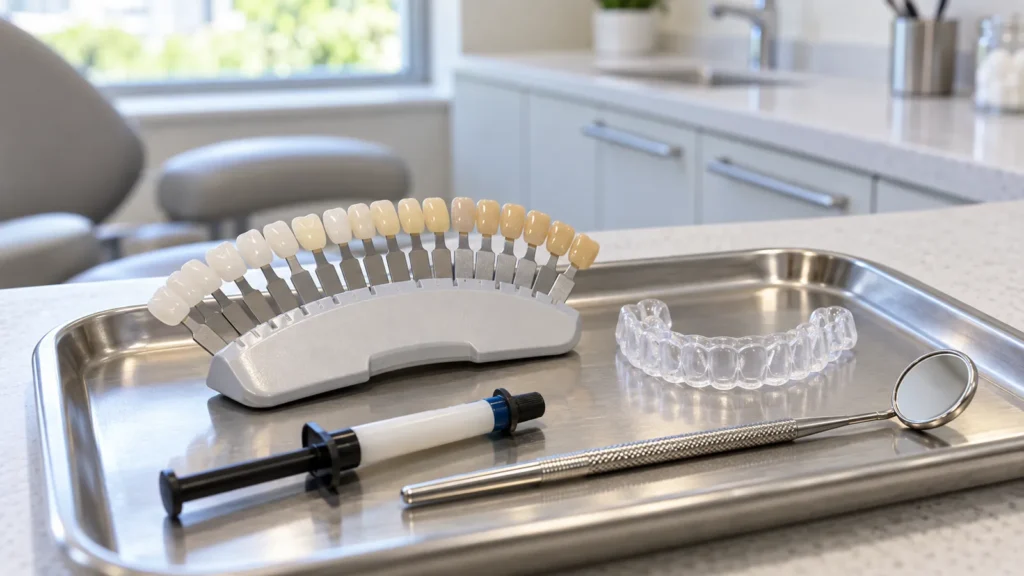
Teeth whitening and composite bonding change different things. Whitening lightens natural tooth colour. Bonding adds tooth-coloured material to a tooth and may help with a small chip, an uneven edge, a gap or selected discolouration. The right choice depends on what you’re trying to change and what an examination shows.
You don’t have to choose a treatment before seeing a cosmetic dentist. It is often more useful to explain the concern in your own words: “My teeth look darker in photos,” “this edge is chipped,” or “one tooth doesn’t match the others.” Those details help guide a more focused conversation.
Start with the concern you want to change
Look at the feature that bothers you most. Is it the overall colour of your teeth, the shape of one tooth or a combination of the two?
Someone whose natural teeth have become darker over time may be asking a different question from someone with a small chip on an otherwise healthy front tooth. Whitening will not rebuild the missing edge. Bonding that edge will not change the colour of every other tooth.
A single dark tooth also needs a closer look before deciding how to change its appearance. The cause may be different from general surface staining, particularly if the tooth has been injured or treated before. Covering a concern cosmetically should not replace assessing the health of the tooth.
At an appointment, mention any pain, sensitivity, previous dental work or recent colour change. You can also explain how noticeable you want the result to be. “I’d like my teeth to look a little brighter” is a perfectly reasonable goal; cosmetic care doesn’t have to mean a dramatic change.
Cosmetic dentistry at Petrolia Dental includes whitening and bonding. A consultation can help establish whether either option addresses your particular concern.
What whitening can and cannot change
Whitening works on natural tooth colour. It does not add tooth structure, close a space or repair a chip. That makes the starting concern important: a colour treatment cannot solve a shape problem.
Teeth also respond differently. The cause of discolouration, existing restorations and your oral health all need to be considered before deciding what improvement might be realistic.
The American Dental Association’s teeth-whitening guidance explains that whitening does not change the colour of crowns, veneers or fillings. If those restorations are visible when you smile, they may no longer match after your natural teeth become lighter.
Sensitivity is another consideration. Tell the dentist if cold drinks already bother your teeth or if previous whitening caused discomfort. Ask how to use the recommended product and what to do if irritation develops. Using more product or leaving it on longer is not a sensible way to chase a quicker result.
It’s worth discussing the shade you hope to reach without treating it as a guaranteed outcome. A photograph of someone else’s teeth cannot show how your own teeth will respond.
What composite bonding may address
Composite bonding uses tooth-coloured resin to change part of a tooth’s surface or shape. Depending on the situation, it may be considered for a small chip, an uneven edge, a small space or an area of discolouration.
The material is shaped to suit the tooth and surrounding smile. That gives bonding a different role from whitening: it can add something where a tooth needs a change in contour rather than simply a change in colour.
Suitability still depends on the tooth. A visible chip may look minor, but the dentist needs to assess how much structure is affected and why it happened. The way your teeth meet also matters when planning where material will be placed.
Bonding isn’t a permanent, maintenance-free surface. It may stain, wear or chip, and it can need polishing, repair or replacement over time. Ask how the proposed restoration would be monitored and what habits could put it under unnecessary stress.
A helpful way to discuss bonding is to ask for a clear explanation of the intended change. Which edge would be altered? Would material be added to one tooth or several? What would the limits be? Those answers are more useful than assuming that “bonding” describes the same treatment for everyone.
Compare purpose, limitations and maintenance
The comparison below focuses on what each treatment is designed to do. It is a discussion aid, not a way to diagnose which treatment your teeth need.
| Consideration | Teeth whitening | Composite bonding |
|---|---|---|
| Target concern | Colour of natural teeth | Selected chips, shape differences, gaps or discolouration |
| What changes | The tooth’s shade; no material is added | Resin is added and shaped on the tooth |
| Key limitation | Does not whiten existing restorations or repair chips | Not suitable for every tooth or bite; material can stain or chip |
| Ongoing care | Home care and any advised whitening maintenance | Home care, monitoring and possible polishing or repair |
Consider how much of the proposed care directly addresses your concern. If tooth colour is your only issue, ask why adding restorative material would be necessary. If a tooth is chipped, ask whether colour treatment alone would leave the problem unchanged.
Neither option has to be presented as the winner. Sometimes one is suitable, sometimes a combination makes sense, and sometimes a different approach deserves discussion. You may also decide that the benefit isn’t enough to justify treatment right now.
When treatment order matters
Whitening and bonding can sometimes be part of the same plan, but they need to be coordinated. The colour of the natural teeth and the colour selected for the bonding material should be considered together.
Suppose you’re thinking about whitening several teeth and bonding a small front-tooth chip. If the new bonding is matched to the starting shade, then the surrounding natural teeth become lighter, the match may change. That’s why it helps to mention both goals before either treatment begins.
Your dentist can explain which sequence, if any, makes sense and when a shade should be selected. There isn’t one schedule that applies to every product, restoration and patient.
Existing dental work deserves the same attention. Bring up a crown or filling that already looks slightly different from neighbouring teeth. It may affect what a balanced result would look like, even if that restoration is functioning well.
Avoid trying to coordinate several whitening products yourself before a bonding appointment. Let the dental team know what you’ve used and when, so recommendations are based on an accurate picture.
Questions to ask before choosing
A useful cosmetic consultation should leave you with a clearer understanding of your options, not just a treatment name. Consider asking:
- What is causing the colour or shape difference I notice?
- Is the tooth healthy, or does it need other care first?
- What would whitening change, and what would stay the same?
- Would bonding address the concern without unnecessary treatment?
- How would existing fillings or crowns affect the result?
- What maintenance, repairs or future replacement might be needed?
- What is included in the estimate for my proposed treatment?
Ask about alternatives as well as the recommended option. If a proposed plan involves more teeth than you expected, request an explanation of why. You should understand the reason for each part of the treatment before making a decision.
Costs should be discussed for your own plan. A price for another person’s whitening or bonding may involve a different number of teeth, materials, appointments or follow-up care. Comparing those details is more useful than comparing a single advertised figure.
Frequently asked questions
Will whitening change the colour of a bonded tooth?
Whitening does not lighten the composite material the way it can lighten natural tooth structure. If you already have visible bonding, discuss it before whitening so the possibility of a shade mismatch is part of the plan.
Can bonding repair a small chip?
It may be suitable for some small chips, but the tooth needs to be examined first. The depth of the damage, remaining tooth structure and bite can affect the recommendation.
Does every dark tooth need cosmetic treatment?
No. A colour difference should first be assessed to understand its cause and whether the tooth is healthy. Treatment may be unnecessary, or the tooth may need care that addresses something beyond appearance.
Can whitening and bonding be combined?
They can sometimes be included in one treatment plan. Your dentist can discuss suitability, shade matching and sequencing rather than assuming both are needed.
How should I compare costs and maintenance?
Ask for an individual estimate and a clear explanation of ongoing care. Include possible touch-ups, repairs or replacement in the discussion, because the initial appointment is only part of the long-term decision.
Discuss your questions with Petrolia Dental
You can start with a small, specific concern rather than a plan to change your whole smile. Knowing whether the issue involves colour, shape or tooth health helps make the conversation more practical.
To discuss whitening or bonding in South Edmonton, contact Petrolia Dental in Terwillegar Heights. Bring your questions and any relevant history so the dental team can help you understand which options may fit.